
McGill Libraries
McLennan Library Building3459 rue McTavish
Montreal, Quebec
H3A 0C9
96 cm of textual records.
John Clark Murray, philosopher and teacher, was born in Paisley, Scotland, the son of David Murray, later provost of Paisley, and Mary Clark of the thread-manufacturing family. He studied philosophy at the Universities of Glasgow and Edinburgh (1850-1856, 1859) under Sir William Hamilton, premier representative of the optimistic and humanistic theist tradition of the Scott ish Enlightenment. After a period of study at Heidelberg and Gottingen, he was appointed Professor of philosophy at Queen's College,
Kingston. He taught there from 1862 to 1871, when he moved to McGill where he was to remain as Frothingham Professor of Mental and Moral Philosophy until his retirement in 1903.
Murray was consciously committed to transplanting the philosophical viewpoint of the Scottish Enlightenment to a Canadian context, although in an independent and critical spirit. His published works - six books and about 125 articles - diffused this optimistic and liberal outlook not only on abstract matters of psychology and ethics, but on a wide range of social and political issues. Two questions claimed his particular attention: capital and labour, and the status of women. It was over the issue of coeducation that his clash with J.W. Dawson took place in 1888. Murray was married to Margaret Poulson Murray, founder of the Imperial Order of the Daughters of the Empire. He passed away in 1917.
Fonds records Murray’s university education, and his teaching and literary activities from 1869-1904. The papers (originals and photocopies) also reveal his interest in the history of his family, and contain a very small number of personal items. Clark's student days in Glasgow and Edinburgh are documented by six lecture notebooks for classics, languages, theology and courses on philosophy by P.C. MacDougall and Sir William Hamilton. Eighteen essays on logical and theological themes, as well as five exegetic exercises and homilies, some delivered in Paisley, are also included. From his sojourn in Germany (1856-1857) come address books, course announcements, and a registration book showing courses, professors, and fees paid.
His activities as a teacher are represented by 22 notebooks of lecture notes on logic, ethics, metaphysics, church history, and topics in the history of philosophy. Some are for courses delivered to the Montréal Ladies' Educational Association. His literary endeavours consist of manuscripts of Christian Ethics (published in 1906), drafts and a fair copy of a tragedy entitled Judas of Kerioth, and The Industrial Kingdom of God (ca 1887). There are also notes and proofs for an article on women's rights.
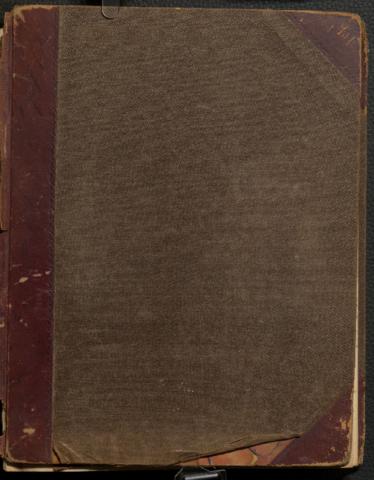
As private records, Murray left a scrapbook of clippings of his articles (1862-1917), an album of photographs of friends and students (ca 1860-ca 1900), a bundle of press clippings on his retirement from McGill, a letter and some press clippings about his Introduction to Ethics (1891) and two letters from former students who became missionaries.Family history materials fall into two groups: genealogical tables and questionnaires concerning the Clark family, with a few letters; and the papers of David Murray, father of J. Clark Murray and, for many years, provost of Paisley. The later documents comprise 4 cm. of correspondence, largely on political matters, with the Home Office, Robert Peel, Lord Shaftesbury, Lord Dufferin and others. Also included is a scrapbook of invitations and news clippings relative to David Murray’s provostship, and to the career of his son (1833-1878), and some letters from his brother John, written in London in August 1843 shortly before John mysteriously vanished.
Material in English.