


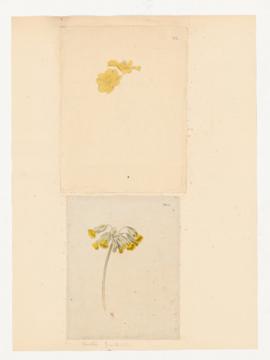
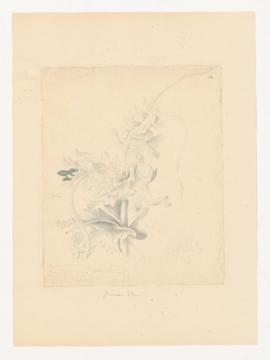
![[Untitled leaves] ; Anemone hepatica](/uploads/r/rare-books-and-special-collections/7/3/c/73c83aacfed82eccc6788642b37fa7746136ec3d6809d1f03090f6a94802e690/rbsc_gwillim_flowers_flowers_11-anemone-hepatica_142.jpg)

McGill Libraries
McLennan Library Building3459 rue McTavish
Montreal, Quebec
H3A 0C9
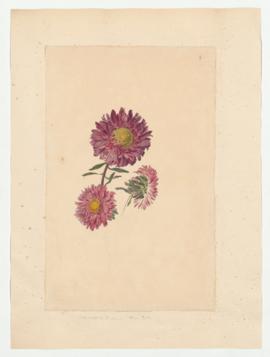
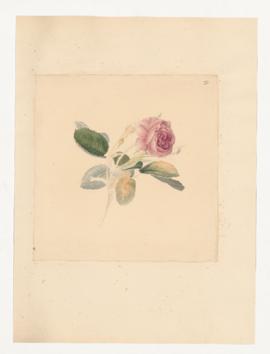
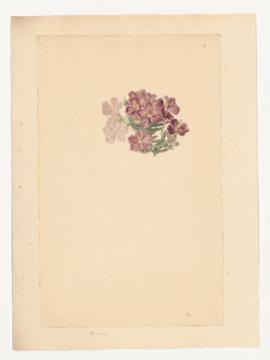
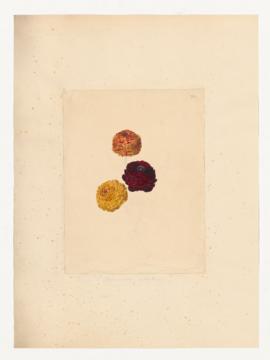
12 paintings : watercolour
Hereford-born Lady Elizabeth Gwillim (née Symonds) was an artist whose watercolors of Indian birds preceded John James Audubon’s bird paintings by about twenty years and are equally detailed and natural. Married in 1784 to lawyer Henry Gwillim, who was knighted in 1801, she accompanied her husband to Madras, India (modern-day Chennai) that same year, together with her younger sister, Mary Symonds. Following the defeat of Tipu Sultan in 1799, which secured South India for the ‘Company Raj’, Henry took the position of Puisne Judge in the Madras High Court. Elizabeth and Mary were prolific letter writers and their correspondence with family and friends in England (now in the British Library MSS Eur C240) includes descriptions of Indian culture and British life in India. During her six years in India, Elizabeth painted some 200 works, many life-sized. As well as birds, she also painted botanical subjects. Elizabeth Gwillim’s drawings of birds have been compared to those of her near contemporary John James Audubon (1). Her botanical drawings were also praised in Curtis’ Botanical Magazine (Sims 1804), which noted the ‘unusual elegance and accuracy’ of her work. Elizabeth Gwillim studied botany with the eminent Madras botanist Dr Johann Rottler (1749-1836), who named a magnolia after her, Gwillimia. She used her garden as an experimental farm, testing delicate northern plants like parsley, mint, thyme and strawberries (the quintessential English fruit) in the damp heat of Madras, and collecting seeds of the local flora for commercial nurseries in Fulham and Brompton. She was hailed as ‘the patroness of the science in that Presidency’ (Sims, Botanical Magazine, 1807), an acknowledgement of her role in an enterprise whose study has to date focused on male botanists like Roxburgh and Heyne. Gwillim died in India at the age of 44 of unknown causes.
Series consists of 12 watercolour paintings of flowers by Elizabeth Gwillim, created while Gwillim was living in Chennai, India (then Madras). The paintings are preceded by pages of brief notes by Casey A. Wood. The flowers are identified by small caption titles written in pencil on each painting.